In the vibrant world of gaming, LCD screens have become the unsung heroes, transforming how players experience their favorite titles. Gone are the days of squinting at fuzzy displays; today’s gamers revel in stunning visuals and crisp graphics that bring their virtual adventures to life. With refresh rates that can make your head spin and colors so vibrant they could make a rainbow jealous, LCD screens are the secret sauce behind epic gaming marathons.
Overview of LCD Screen Gaming
LCD screens transformed gaming by providing superior visual quality, enabling players to immerse themselves in vibrant worlds. Their evolution and popularity define modern gaming experiences.
Definition and Evolution
LCD stands for liquid crystal display, a technology that uses liquid crystals to produce images on screens. This technology has evolved from the early days of bulky monitors, which displayed poor image quality, to sleek, high-definition screens with faster refresh rates. Gamers appreciate how these advancements allow for smoother gameplay and more responsive interactions. Improved display resolutions now support 4K and beyond, providing crystal-clear graphics that enhance realism. As manufacturers continue to innovate, advancements such as OLED technology and higher refresh rates keep driving the evolution of LCD screens.
Popularity in the Gaming Community
Many gamers prefer LCD screens for their ability to deliver stunning visuals and vibrant colors. Their lightweight design allows for easy setup and portability, making them a popular choice for tournaments and LAN parties. Community feedback reflects a strong preference for faster response times, crucial for competitive gaming. Gamers frequently cite the clarity and consistency of image quality as essential factors in their enjoyment. Gaming monitors with low input lag and high refresh rates dominate the market, solidifying LCD’s role as the go-to choice for enthusiasts and casual players alike.
Advantages of LCD Screens in Gaming
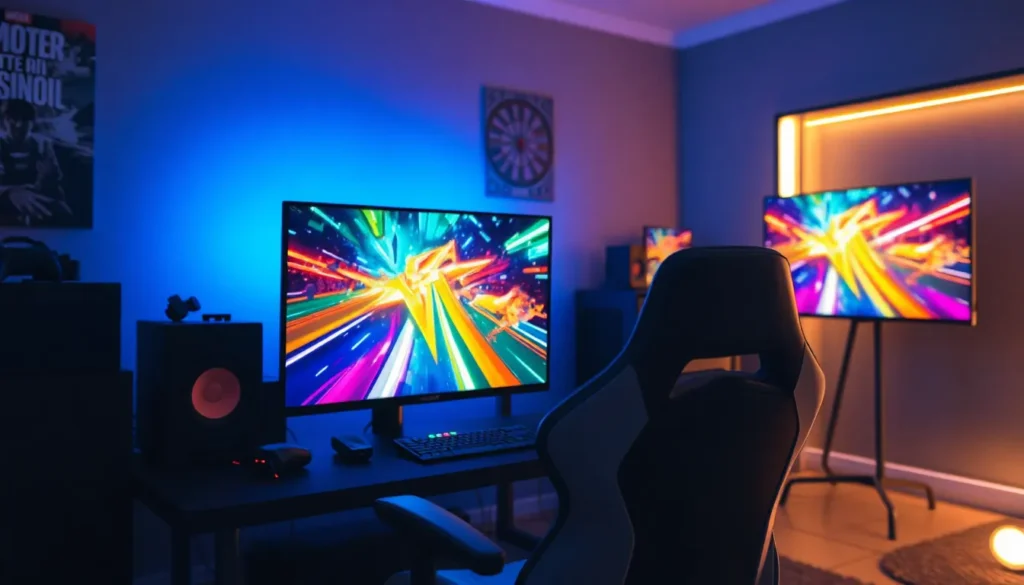
LCD screens offer significant advantages that enhance the gaming experience. High-definition visuals and rapid performance make these screens a popular choice among gamers.
Image Quality and Clarity
Image quality stands out in LCD screens, delivering crisp and vibrant visuals. Gamers appreciate how colors pop and how details emerge sharply on high-resolution displays. Superior contrast ratios contribute to immersive gaming environments, where darker shades appear deeper and lighter shades stand out. Many gamers prefer LCD monitors capable of 4K resolutions, enabling them to enjoy realistic graphics that elevate their overall experience. Enhanced color accuracy plays a critical role, making in-game graphics resemble real-world visuals closely.
Response Time and Refresh Rates
Quick response times mark another key advantage of LCD screens. Many models boast response times as low as 1 millisecond, minimizing ghosting and blurring during fast-paced action. Gamers favor refresh rates of 120 Hz or higher for smoother motion, enabling fluid transitions between frames. High refresh rates ensure seamless gameplay, particularly in competitive environments where every fraction of a second counts. Furthermore, advanced technologies like Adaptive Sync eliminate screen tearing, improving overall visual stability during intense gaming sessions.
Disadvantages of LCD Screens in Gaming
LCD screens come with certain drawbacks that can affect the gaming experience. Understanding these limitations helps gamers make informed choices.
Potential Motion Blur Issues
Motion blur often occurs in LCD screens, particularly during fast-paced gaming moments. Many gamers notice a delay in response when moving quickly on-screen. This delay results in visual artifacts that can disrupt immersion. Even models with low response times may experience issues, especially during intense action sequences. Players often prefer screens with higher refresh rates to combat this problem, but not all models provide the necessary performance. Ghosting effects can detract from clarity, impacting the overall gameplay experience.
Color Accuracy Concerns
Color accuracy varies widely across LCD screens. Some displays fail to reproduce true-to-life colors, leading to a less immersive gaming environment. Gamers frequently express dissatisfaction with washed-out colors or overly saturated hues. This inconsistency affects how players perceive game graphics, diminishing overall enjoyment. Certain LCD models may struggle to display darker scenes accurately, resulting in loss of detail and depth. Quality control also varies among manufacturers, complicating the selection process for consumers.
Comparing LCD Screens to Other Display Technologies
The differences between LCD screens and other display technologies, such as LED and OLED, significantly impact gaming experiences.
LED vs. LCD
LED technology enhances LCD screens by using light-emitting diodes for backlighting. This results in improved brightness and energy efficiency compared to traditional LCDs. LED screens often provide greater contrast ratios, leading to deeper blacks and more vibrant colors. Gamers appreciate these features, especially in visually demanding games. Moreover, LED displays generally consume less power, maintaining long gaming sessions without excessive energy use. However, the underlying LCD technology still influences color accuracy, which may not reach the same levels as other technologies. Overall, LED displays improve the LCD gaming experience by enhancing brightness and color contrast.
OLED vs. LCD
OLED displays present another alternative to LCD technology, offering superior color accuracy and deeper black levels. Each pixel in an OLED screen emits its own light, eliminating the need for backlighting. This results in a broader color spectrum, creating stunning visuals for games. Fast response times of OLED panels also reduce motion blur, enhancing gameplay during intense action sequences. However, the potential for screen burn-in is a concern, as static images may damage the display over time. In contrast, LCDs typically avoid this issue but may fall short on contrast and vibrant color display. Gamers may prefer OLED for rich visuals but must weigh the risks against the benefits.
LCD screens have undeniably revolutionized the gaming landscape. With their impressive visuals and rapid performance capabilities, they cater to both casual gamers and competitive players alike. The vibrant colors and sharp details create immersive environments that enhance gameplay experiences.
While there are some drawbacks, such as potential motion blur and color accuracy issues, understanding these limitations allows gamers to make informed decisions. As technology continues to evolve, LCD screens will likely remain a popular choice, balancing performance and visual quality effectively. Ultimately, choosing the right display can significantly elevate the overall gaming experience, making it a crucial consideration for any gamer.