Table of Contents
ToggleTristana might look like just another cute Yordle with a gun, but she’s one of League of Legends’ most explosive ADCs when played correctly. Whether you’re climbing the ranked ladder or just trying to pop off in normals, understanding her kit, build paths, and positioning can turn you from a liability into a hard carry. This guide breaks down everything you need to know about Tristana in 2026, from her early game farming patterns to late-game teamfight positioning, so you can harness her scaling potential and turn late-game fights in your team’s favor.
Key Takeaways
- Tristana is a scaling hypercarry ADC that thrives by farming safely early game and leveraging her Rocket Jump mobility to position and kite effectively in mid and late-game teamfights.
- Master the Explosive Charge passive by stacking auto-attacks and detonating with E for burst trades, then maximize your damage output with Press the Attack rune and the core Kraken Slayer into Infinity Edge build path.
- Respect unfavorable matchups in lane (Lucian, Zeri, Jinx) by playing passively and farming 5-6 CS per minute behind minions, allowing your scaling and range advantage to take over by level 9-11.
- Position at the edge of teamfights, maintain sustained DPS during fights, and use Buster Shot defensively to peel for teammates or offensively to knock enemies into your team’s damage.
- Wave management is critical—freeze waves near your tower to farm safely and avoid ganks, then rotate with your team only when you have a clear advantage or for critical objectives like Baron and Elder.
- Learn Rocket Jump reset mechanics by hitting enemy champions to reset the cooldown multiple times in a single fight, separating good Tristana players from great ones who dictate positioning and fight outcomes.
Who Is Tristana and Why She Matters
Champion Overview and Role
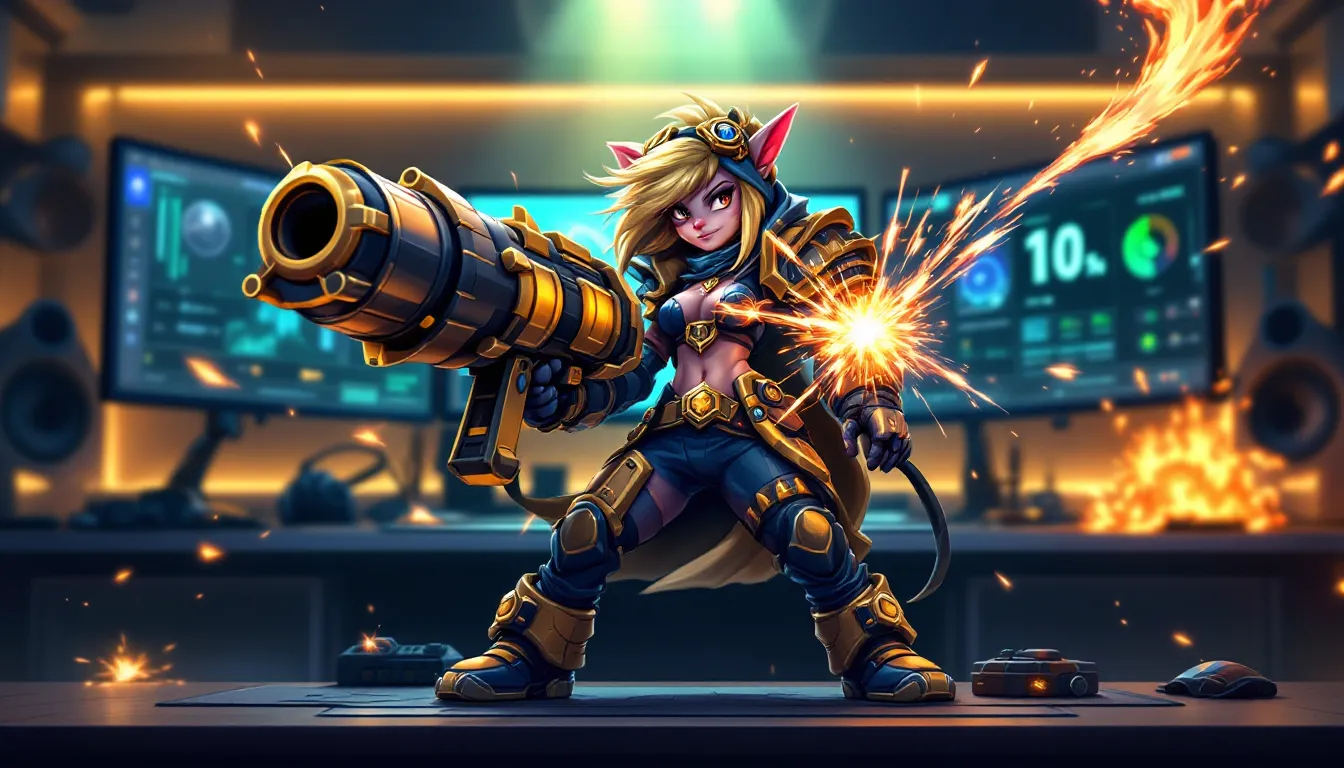
Tristana is a ranged ADC with a kit built around jump mobility, crowd control, and explosive burst damage. She operates as a hybrid hyper-carry, part sustained damage dealer, part burst assassin depending on how far her game has progressed. Her role in a team is straightforward: survive the early game, scale hard into the mid and late game, and leverage her range and mobility to position safely while dealing massive damage.
Her kit makes her unique in the ADC role. Unlike traditional right-clickers who rely purely on attack speed and AD scaling, Tristana’s abilities offer ways to kite, escape, and reset fights. This means her play pattern shifts dramatically as she levels up and gains items. Early on, she’s vulnerable. By midgame, she’s a real threat. By late game, she’s often the deciding factor in teamfights.
Tristana sits in a solid spot in the current meta (Patch 13.1 through early 2026). She’s not perma-banned like Zeri or Jinx, but she’s also not overlooked. This makes her a valuable pick in solo queue where you’re not facing coordinated bans, and she performs well in competitive settings when the meta shifts toward scaling ADCs.
Lore and Character Background
Tristana is a Yordle explosives expert from Bandle City, known for her enthusiasm bordering on recklessness. In League’s lore, she’s part of a military tradition, her family members are officers, and she carries the weight of that legacy. Her obsession with bigger guns and bigger explosions drives her character and, thematically, her kit.
Her character design reflects her personality perfectly. She starts with a small pistol and, as she levels up, gains access to increasingly powerful weapons, her Q boosts her attack speed, her E plants bombs, and her ultimate fires a buster shot that can knock enemies back. The progression feels earned and matches her character arc within the game itself.
While lore isn’t essential for climbing, understanding Tristana’s background gives context to why she’s built the way she is: a scrappy underdog who relies on scaling, mobility, and precision to overcome opponents.
Tristana’s Abilities Breakdown
Passive: Explosive Charge
Explosive Charge is where Tristana’s identity lives. Every auto-attack plants a stack (max 5) on the target. When stacks detonate, either when the timer expires or when you trigger them manually with E, they deal magic damage scaling with AP and bonus AD. This passive makes her hybrid scaling interesting and incentivizes auto-attack trading in lane.
Key details: The passive damage scales with levels, so it becomes increasingly relevant as the game goes on. Early game, it’s negligible. By level 11, it’s a meaningful chunk of poke damage. This is why Tristana scales so hard, her raw damage from autos compounds.
Q: Rapid Fire
Rapid Fire is Tristana’s primary sustained damage tool. She gains a huge attack speed buff for a few seconds (currently around 60-100% depending on rank), and her attacks during this window count as single-target, making them apply on-hit effects more efficiently. No mana cost, low cooldown.
This ability is why Tristana works with attack-speed-heavy builds. During Rapid Fire, you’re essentially machine-gunning, every shot plants another Explosive Charge stack, leading to higher detonation damage. In teamfights, activate this when enemies are clumped or when you have a clean angle.
W: Rocket Jump
Rocket Jump is your escape, engage, and positioning tool. Tristana leaps to a target location, and if she hits an enemy champion with the jump, the cooldown resets. This is her skill ceiling mechanic, resetting the cooldown by hitting enemies in fights means you can reposition multiple times in a single teamfight, which separates good Tristana players from great ones.
Use it to chase down wounded enemies, escape ganks, or hop over walls. The jump has a deceptive range, it’s longer than it looks, especially when leveled up. One critical note: it doesn’t provide invulnerability during the leap, so timing matters when dodging abilities.
E: Explosive Charge
Wait, there’s another Explosive Charge? Confusing, but yes. This active ability detonates all stacks on a target, dealing bonus damage based on the number of stacks and scaling with your AP/bonus AD. It’s your burst tool and your stack management button.
Usage is straightforward: auto-attack enemies to stack, then use E to pop them all at once for a burst combo. This is especially effective in lane when trading, get 2-3 autos off, then E for a satisfying chunk of damage. In fights, it’s your way to frontload burst before you can get full autos off.
R: Buster Shot
Tristana’s ultimate, Buster Shot, fires a massive projectile that knocks the target back and deals damage scaling with her AD. It has a high cooldown early but reduces significantly with rank and CDR, making it spammable by late game. It applies Explosive Charge stacks, so it synergizes with her passive.
Buster Shot is utility and damage rolled into one. Use it to knock enemies away from teammates, interrupt key abilities (though it’s not guaranteed), or knock enemies into your team during fights. Some Tristana players use it offensively to knock enemies into tower range or off walls. It’s versatile, which is why understanding when to use it defensively vs. offensively separates casual players from climbers.
Build Paths and Item Recommendations
Early Game Core Items
Your early build sets the tone for how you’ll scale. The standard opening is Kraken Slayer into Infinity Edge, this is the mythic + legendary combo that defines ADC itemization in 2026. Kraken provides early Oomph, a huge spike at 2 items, and keeps your attack damage and lifesteal reasonable.
Before mythic, you’re building Vampiric Scepter for sustain in lane and waveclear efficiency. This is non-negotiable unless you’re way ahead and can skip it. A second item to consider is Blade of the Ruined King if the enemy team is stacking HP (think Ornn, Cho’Gath, Sion). Otherwise, IE is your go-to second item for raw damage scaling.
Boots? Berserker’s Greaves into Plated Steelcaps or Mercury’s Treads depending on enemy threat. If you’re taking zero magic damage and no AD threats, Berserker’s early is fine. But most games, you’ll respect the enemy jungler and swap to defensive boots around level 6.
Mid-Game Scaling Items
By midgame, you’re three items deep: Mythic, IE, and boots. Your next acquisition depends on enemy comp and your position in the game. If you’re ahead, Statikk Shiv or Navori Quickblades add waveclear and reduced ability cooldowns respectively. Shiv is the safer pick because it adds damage and waveclear simultaneously. Navori is greedier, it reduces your Q cooldown, letting you spam it more often, but provides no defensive layers.
If the game is closer and enemies have heavy CC, Maw of Malmortius or Kaenic Rookern provide magic defense with useful passives. Maw gives a shield against magic burst: Kaenic reduces enemy healing if they have sustain champs like Aatrox or Soraka.
Wave management is crucial here. Your goal is to farm safely, pick off isolated enemies, and avoid unnecessary teamfights unless you have a guaranteed advantage. Tristana’s scaling means every minute you’re alive and farming is value.
Late Game Powerhouse Builds
Full build Tristana is a monster. Your six-item setup typically looks like: Kraken Slayer, Infinity Edge, Berserker’s Greaves, Statikk Shiv, Lord Dominik’s Regards, and either Mortal Reminder or Adaptive Force item.
Lord Dominik’s is critical against armor-stacking enemies. If enemies are building armor (which they will be), LDR punches through that and keeps your DPS relevant. Mortal Reminder is necessary if enemies have serious healing, Aatrox, Talon, Soraka, Akshan, etc.
Late game, your role shifts entirely. You’re not hunting kills: you’re positioning at the edge of fights, dealing sustained damage, and looking for moments to hop in with Rocket Jump when enemies are clumped or out of position. Your ultimate becomes a zone control tool as much as a damage tool. A well-placed Buster Shot at the start of a fight can swing the entire engagement.
One more note: adaptive items like Manamune can slot in if you’re itemizing for pure damage and have spare gold, but it’s not standard. Stick to the core build and adapt based on enemy CC and armor/healing.
Laning Phase Strategy and Early Game Tips
Matchup Analysis Against Common Opponents
Tristana’s lane is all about understanding matchups and respecting power spikes. Against Lucian, he dominates early (levels 1-3) because his damage trades are brutal and his kit doesn’t reward extended autos. Play passive, farm safely behind minions, and scale. By level 9-11, you outrange him and start winning if he oversteps.
Vs. Jinx, the matchup is skill-based. She outranges you early with minigun spinup, but her immobility is her weakness. Respect her damage in trades but look for all-ins when she’s overextended. Your Rocket Jump gives you the mobility advantage, use it to close gaps or escape her CC.
Vs. Zeri, avoid all-ins unless you’re ahead. She wins all short trades because her Q deals insane dps and she heals. Instead, farm safely, poke with autos + E combos from range, and teamfight where your superior positioning matters more than her early fight dominance.
Vs. Caitlyn, respect her headshot damage early but abuse her lack of mobility. She can’t chase you if you kite properly, and her range advantage isn’t as severe once you’re level 6. Get close (safely) and force fights where Rocket Jump lets you dictate the terms.
Vs. Ashe, focus on dodging her arrows and trading autos when her Q is down. She outranges you but is immobile. By midgame, your engage potential with Rocket Jump makes her a free kill if she overextends even slightly.
For a more comprehensive tier list of ADC matchups, resources like tier lists on Game8 break down specific win conditions and itemization tweaks based on opponent.
Trading and Farming Mechanics
Early game Tristana is about farming efficiently and taking safe trades. Your goal is 5-6 CS per minute in the first 10 minutes. This sounds easy but requires discipline, every time you go for a trade, you risk missing CS.
The most profitable trade is the autos + E combo: get 2-3 autos off on the enemy ADC, stack Explosive Charge, then detonate with E and back off. This trades damage while maintaining your health pool. Against aggressive supports, make sure your support is nearby before committing.
Wave management is critical. Don’t hard-push the wave unless you have a health advantage or your support can defend. Pushing makes you vulnerable to ganks, and Tristana’s early weakness means a 2v2 jungle fight goes badly for you. Instead, freeze the wave near your tower and farm safely.
CS is everything early. A kill is worth maybe 15 minions: dying costs you 30+ minions worth of pressure. Play for the long game. Respect your lack of early game tools and let your items and levels do the talking.
One mechanical detail: animation-cancel autos by weaving abilities between shots to maintain DPS while moving or repositioning. It sounds fancy but just means clicking to move and clicking to auto in rhythm. Practice this in practice tool, it makes your laning smoother.
Mid and Late Game Gameplay
Team Fighting and Positioning
Teamfights are where Tristana truly shines. Your positioning is paramount. Never, ever be the first one in. Let your teammates initiate, identify where you can stand safely, and deal damage. Your range advantage (especially after leveling up and buying items) means you can be further back than Zeri or Kai’Sa.
Once the fight starts, look for opportunities to use Rocket Jump to either chase down low enemies or reposition away from incoming threats. If an assassin jumps you, use W to jump away (and potentially reset it if you land on another enemy). Your ultimate is either a peeling tool (knock enemies away from your backline) or an engage tool (knock enemies into your team).
DPS uptime is critical. In mid and late game, you’re less about burst combos and more about sustained right-clicking. Activate Q whenever you can safely attack and just deal damage. Your passive does the work, stacks accumulate, E detonates them, rinse and repeat.
Watch for fights where the enemy team is clumped. If Orianna lands a shockwave or your team lands AOE, you can group up and teamfight. If they’re spread out, don’t force it. Kite, farm, and look for a better engagement angle.
Wave Management and Rotations
Wave management separates average ADCs from great ones. Understand the minion wave state: is it crashing into your tower (danger, lose minions), is it slow-pushing away (safe to farm), or is it frozen (optimal, safest farming)?
Never hard-push unless you’re grouping for a teamfight. Instead, maintain control. Kill the wave slowly, position near your tower, and farm without overextending. This denies enemies information about your location and keeps you safe for rotations.
Rotations are about timing. When your bot lane has a won fight, you might rotate mid to help your midlaner siege a tower. When bot lane is unfavorable, you pick up sidelane CS and farm safely while your team groups for an objective. By late game, you should never be alone if possible, stick with your team, farm when safe, and group for critical objectives like Baron or Elder.
One scenario: if the enemy has strong engage (like Malphite or Leona), don’t position where they can easily reach you. Farm from a safe angle, and if they do engage, use Rocket Jump to escape and reposition. Your sustained damage means you win fights that go long, so avoid early burst trades and let fights play out in your favor.
Runes and Summoner Spells
Primary Rune Choices
Tristana’s rune page is flexible, but the standard setup centers around Precision tree. The keystone is almost always Press the Attack (PTA). This gives you a burst damage proc after three autos and increases damage you deal to the target afterward. It synergizes perfectly with your auto-attack focused playstyle and E combos. You proc PTA, auto three times, detonate with E, and watch the damage numbers spike.
After PTA, the tree goes Triumph (healing on kills), Legend: Bloodline (lifesteal scaling), and Coup de Grace (execute damage at low health). This setup maximizes your scaling potential and keeps you alive in fights. Some players take Last Stand instead of Coup de Grace for defensive value, but on Tristana, offense is defense, end the fight before it hurts you.
A secondary option is Lethal Tempo for pure DPS in extended fights, but PTA is more versatile because it frontloads damage and helps in quick skirmishes where Lethal Tempo hasn’t ramped up yet. Stick with PTA unless you’re specifically expecting a long-drawn-out meta.
Secondary Rune Trees and Adaptability
Your secondary rune tree is flexible based on the matchup. Against heavy AD enemies (Zeri, Lucian, Graves supports), take Resolve with Second Wind (health regen on damage taken) and Overgrowth (bonus health scaling). This keeps you alive in poke wars.
Against AP threats (Brand, Lux, Zyra supports), swap to Sorcery with Nullifying Orb (shield against burst magic damage) and Transcendence (CDR scaling, useful for late-game Buster Shot spam).
In balanced matchups, Sorcery with Manaflow Band (extra mana) and Gathering Storm (scaling damage) is solid. Gathering Storm is a win-condition rune for Tristana because your scaling is your identity, every 10 minutes, you get more AD, and that compounds with your items.
For summoner spells, Flash + Smite is not a thing (ADC doesn’t take Smite unless you’re trolling). Instead, it’s Flash + Heal. Flash is untouchable, essential for escaping and repositioning. Heal is standard bot lane for late-game teamfight sustain. Some players take Exhaust into heavy all-in supports like Leona or Nautilus, but Heal is safer and more universally useful.
One emerging preference: some high-elo Tristana players take Teleport into split-push focused builds where they farm sidelanes and TP to fights. This requires careful timing and map awareness but rewards macro play. For climbing from mid-elo and below, stick with Flash + Heal, it’s simpler and more forgiving.
For deep dives on rune optimization based on specific meta shifts, competitive guides on esports analysis at LoL Esports often showcase what pros are running and why. Patch notes and meta shifts can change rune priorities, so staying updated helps.
Conclusion
Tristana is a champion that rewards patience, scaling awareness, and clean positioning. She’s not a lane bully, she’s a scaling hypercarry that dominates midgame and becomes an absolute monster by late game. Master her kit, respect her early weakness, and execute her build path with precision, and you’ll find yourself carrying games where opponents never see it coming.
The key differences between casual Tristana players and climbers boil down to three things: (1) understanding when you win and lose matchups so you respect the early game, (2) managing waves and rotations to maximize farming without dying to ganks, and (3) positioning in teamfights where your range and mobility let you kite and deal sustained damage safely.
Start in practice tool, learn the ranges of your abilities, and get comfortable with Rocket Jump resets in fights. Then take her into normals to build intuition for matchups. Once you feel confident, take her into ranked and let your scaling do the work. With practice and focus, Tristana will absolutely carry you up the ladder.
For ongoing meta analysis and build adjustments as patches roll out, platforms like Mobalytics champion guides track win rates and common builds across elo tiers, helping you stay current as the game evolves. Good luck, and happy climbing.