Soldering game boy parts might sound like a daunting task, but it’s really just a fancy way of saying “let’s fix that nostalgic handheld treasure.” Whether it’s a broken screen or a stubborn battery connection, every Game Boy deserves a second chance at glory. Imagine the joy of reviving that classic device and reliving those pixelated adventures.
What Is Soldering Game Boy Parts?
Soldering Game Boy parts involves using heat to join electronic components, enabling repairs or upgrades. Repairing broken screens, faulty buttons, or damaged battery connections commonly involves this technique. The process requires a soldering iron, solder wire, and proper tools to ensure a reliable connection.
Game Boy enthusiasts often face issues such as screen flickering or battery failure. These problems usually arise from poor solder joints or worn components. Through soldering, individuals can restore the functionality of these devices, creating a deeper connection to nostalgia.
Taking the time to learn opens opportunities for customization. Upgrades, like installing a new screen or enhancing audio quality, can improve gameplay experiences. Certain features, such as backlit screens, add modern functionality to classic devices.
Before starting, a clear understanding of basic soldering techniques proves essential. Removing old components and preparing the surface ensures a clean solder joint. This may involve desoldering wires carefully using solder wick or a desoldering pump.
Maintaining a steady hand contributes to precise connections, minimizing potential damage to surrounding components. Replacing parts will often involve aligning new components accurately before applying solder.
Safety precautions also play a crucial role. Using safety goggles protects eyes from solder splashes, while well-ventilated areas help avoid inhaling fumes. Overall, soldering Game Boy parts fosters creativity and technical skills while preserving classic gaming history.
Essential Tools for Soldering Game Boy Parts
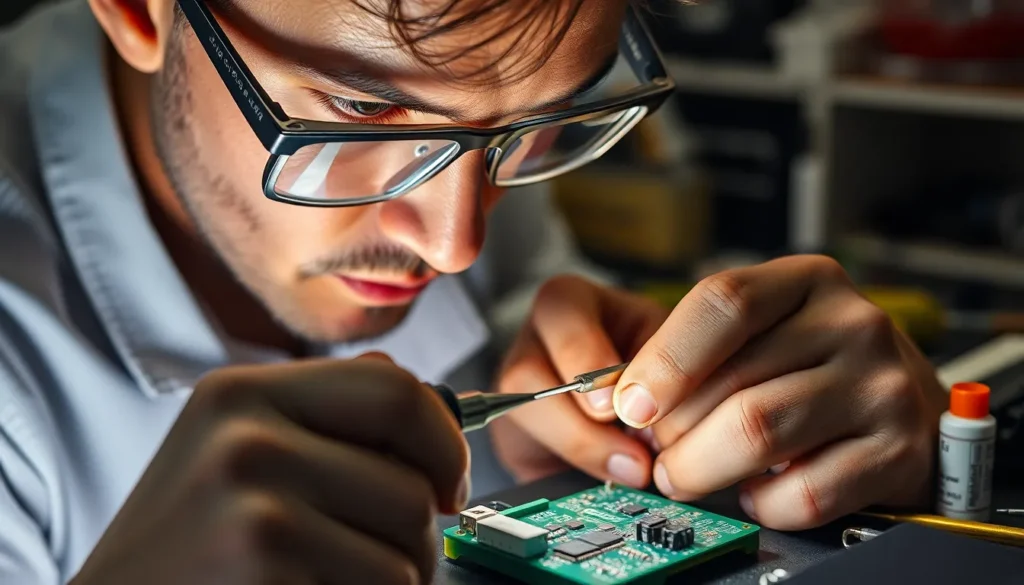
Soldering Game Boy parts requires specific tools to ensure successful repairs. Each tool plays a crucial role in achieving reliable connections.
Soldering Iron
A soldering iron is vital for any soldering project. Typically, a well-defined temperature range of 350 to 400 degrees Fahrenheit works best for electronics. Choose a fine-tip soldering iron to avoid damaging surrounding components. Quality soldering irons often heat up quickly, minimizing wait times. Consider using a soldering station for added control and precision. Popular models include the Hakko and Weller brands, known for their reliability and performance.
Solder Wire
Using the right solder wire is pivotal for effective connections. Lead-free solder wire is a common choice for Game Boy repairs as it’s safer and more environmentally friendly. A thickness of 0.6 mm to 0.8 mm works well for most applications. Look for rosin-core solder, as it simplifies the soldering process by providing flux within the wire. Familiar brands like Kester and MG Chemicals produce high-quality solder wire suited for electronics.
Flux
Flux enhances the soldering process by improving metal flow and adhesion. Using flux reduces oxidation on metal surfaces, ensuring better solder connections. Choose a no-clean flux for convenience, as it doesn’t require cleaning after soldering. Available in liquid, paste, or pen form, each type has specific applications. Liquid flux is excellent for thorough coverage, while flux pens offer precision when working on small components. Popular options include Kester and Amtech flux for reliable results.
Common Game Boy Parts to Solder
Soldering various Game Boy parts is essential for effective repairs and upgrades. Understanding these components can enhance the overall experience of restoring a classic device.
Replacement Screens
Replacement screens for Game Boy systems offer a significant improvement over original displays. After years of use, many devices suffer from cracked, dim, or non-functioning screens. Upgrading to an LCD or IPS display can enhance brightness, contrast, and viewing angles. Choosing a compatible screen ensures a seamless fit. Correct soldering techniques are crucial for a reliable connection to the motherboard. Adapting to modern screen technology improves the gameplay experience dramatically. Enthusiasts appreciate the clarity an upgraded screen brings to their favorite titles.
Battery Connectors
Battery connectors play a vital role in powering Game Boy devices. Over time, connectors can wear out, leading to intermittent power issues or complete failure. Replacing these connectors with new ones ensures stable energy supply. Properly soldering the connections prevents future problems and enhances longevity. Using high-quality connectors can also improve battery life and performance. Many players notice a considerable difference in gameplay when the battery functions smoothly. Prioritizing effective soldering of battery connectors contributes to overall device reliability and user satisfaction.
Step-by-Step Guide to Soldering Game Boy Parts
Soldering Game Boy parts requires careful preparation and precise techniques. This guide outlines essential steps for successful repairs.
Preparation
Gather all necessary tools before starting the soldering process. This includes a soldering iron, solder wire, flux, and safety goggles. Ensure the workspace is clean and well-ventilated to minimize hazards. Check that the soldering iron reaches a temperature between 350 to 400 degrees Fahrenheit for optimal results. Additionally, inspect the components needing soldering, such as replacement screens and battery connectors. Identifying specific areas of wear or damage helps focus efforts during repairs. Familiarity with the motherboard layout aids in making accurate connections. Taking these steps creates a solid foundation for the soldering task ahead.
Soldering Techniques
Mastering basic soldering techniques is crucial for effective repairs. Start by applying a bit of flux to the area where soldering occurs; this ensures smooth metal flow. Next, heat the joint with the soldering iron before introducing solder wire. The solder should melt and flow around the connection, forming a secure bond. Keep the soldering duration brief to prevent damage to surrounding components. Practice steady hand control to maintain precision, especially on smaller parts. Examine each joint after soldering for a shiny and smooth appearance. Solid connections lead to improved performance and reliability in Game Boy devices.
Tips for Successful Soldering
Soldering Game Boy parts requires attention to detail and the right techniques. Following specific tips ensures a successful repair process.
Avoiding Common Mistakes
Using the incorrect soldering iron temperature leads to poor results. Maintaining a temperature between 350 and 400 degrees Fahrenheit optimizes solder flow. Forgetting to apply flux may also create weak joints, so it’s essential to use rosin-core solder. Overheating components can cause damage, so heating only the joint ensures better control. Additionally, rushing the process can lead to misalignment. Keeping a steady hand while applying solder promotes precision. Taking a moment to double-check connections before soldering saves time and effort later.
Ensuring Reliable Connections
Assessing components before soldering reveals potential issues. It’s crucial to inspect for signs of wear or damage, particularly in connectors. Applying flux aids solder adhesion and improves overall joint quality. Ensuring that the surface is clean and free of oxidation promotes better conductivity. Heating the joint adequately allows the solder to flow properly. After soldering, visually inspecting each connection assures completeness. If necessary, reflowing the solder helps ensure a solid bond. Testing connections post-soldering confirms functionality and prevents future problems.
Soldering Game Boy parts is a rewarding endeavor that not only breathes new life into cherished devices but also enhances gaming experiences. By mastering essential techniques and using the right tools, anyone can tackle common issues like screen flickering or battery failures.
The satisfaction of successfully completing a repair is unmatched, and the skills gained can lead to exciting customization opportunities. With practice and patience, enthusiasts can ensure their Game Boys remain functional and enjoyable for years to come. Embracing this hands-on approach fosters a deeper connection to gaming history and encourages creativity in restoring these classic handhelds.