Table of Contents
ToggleIf you’re a Mac user who’s been eyeing League of Legends but hit a wall during the download process, you’re not alone. The short answer is no, League of Legends doesn’t have an official Mac client. But here’s the thing: you’re not locked out entirely. In 2026, there are more ways than ever for Mac players to jump into Summoner’s Rift, whether you’re a casual player grinding solo queue or someone chasing Challenger rank. This guide breaks down every realistic option available, explains why Riot hasn’t released a native Mac version even though the game’s massive player base, and walks you through the best methods to get playing right now. We’ll cover the league of legends on mac solutions that actually work, discuss league of legends size considerations for different platforms, and help you understand the league of legends download size across your options. Whether you’re rocking an M-series chip or an older Intel Mac, there’s a path forward.
Key Takeaways
- League of Legends has no official Mac client as of 2026, but Mac players can access the game through cloud gaming, virtual machines, Boot Camp, or compatibility layers.
- Cloud gaming services like Xbox Game Pass Ultimate and GeForce Now are the most practical and accessible options for Mac players, requiring only a minimum 35 Mbps internet connection.
- Intel Mac users can achieve native performance using Boot Camp to partition their drive and run Windows natively, though this option is unavailable on modern M-series Macs.
- Competitive ranked play is viable on Mac through cloud gaming for most players below Diamond rank, though the 20-50ms added latency may impact high-ranked mechanical execution.
- Riot Games prioritizes Windows development due to market dominance and has rebuilt League’s proprietary engine specifically for Windows architecture, making a native Mac port unlikely in the near term.
- Macro play and strategic decision-making become even more critical for Mac players, as these skills are less latency-dependent than raw mechanical execution in competitive matches.
The Short Answer: Current Mac Compatibility Status
As of 2026, League of Legends still doesn’t have an official native Mac client. Riot Games has made no official announcement about plans to develop one. That means you cannot download the game directly from the League of Legends website and launch it natively on macOS, whether you’re running an M1, M2, M3 Mac or an Intel-based system.
But, the lack of official support doesn’t mean you can’t play. Cloud gaming services, emulators, virtual machines, and compatibility layers have matured significantly. Players can access League on Mac through legitimate workarounds, though each comes with different tradeoffs in latency, performance, and setup complexity.
The reality is that Mac represents a small percentage of gaming-focused computer sales, and Riot’s business model has centered on Windows-first development. That calculation hasn’t changed enough to warrant a native Mac build.
Why League Of Legends Doesn’t Support Mac Natively
Riot Games’ Official Stance
Riot Games has been transparent about this issue for years. The company prioritizes platforms with the largest player bases and where development resources yield the best return. Windows dominates the gaming PC market, and Riot has consistently maintained that developing a native Mac version isn’t a priority given the cost and effort required.
Also, Riot’s development philosophy focuses on creating a unified experience across supported platforms. Building a separate Mac codebase means additional testing, bug fixes, and ongoing maintenance, resources that Riot has chosen to allocate elsewhere, particularly toward console ports and mobile expansions.
Unlike some developers who’ve embraced cross-platform engines like Unreal Engine or Unity to simplify Mac porting, League of Legends runs on a proprietary engine that was designed and optimized for Windows systems from the ground up.
Technical Limitations And Engine Constraints
League of Legends uses a custom engine developed entirely by Riot Games. This engine was built specifically for Windows architecture and has been fine-tuned for years to maximize performance on that platform. Converting it to macOS, especially in a way that maintains performance parity, would require essentially rewriting core systems.
The game’s engine handles rendering, physics, networking, and asset loading in ways that are deeply tied to DirectX, Microsoft’s graphics API. macOS uses Metal as its primary graphics framework, and converting from DirectX to Metal isn’t a simple translation: it’s a significant engineering undertaking.
Also, the M-series architecture (Apple Silicon) introduced another layer of complexity. While Apple’s chips are genuinely powerful, games designed exclusively for x86-64 architecture don’t automatically translate efficiently to ARM. Early attempts at emulation (through Rosetta 2) showed promise but introduced latency and performance overhead that would be unacceptable for competitive play.
Finally, there’s the infrastructure piece. Riot would need to maintain separate servers, patches, and updates for a Mac version, a process that becomes exponentially more complex as the game evolves and receives frequent balance changes across patches.
How To Play League Of Legends On Mac: Your Available Options
Option 1: Cloud Gaming Services
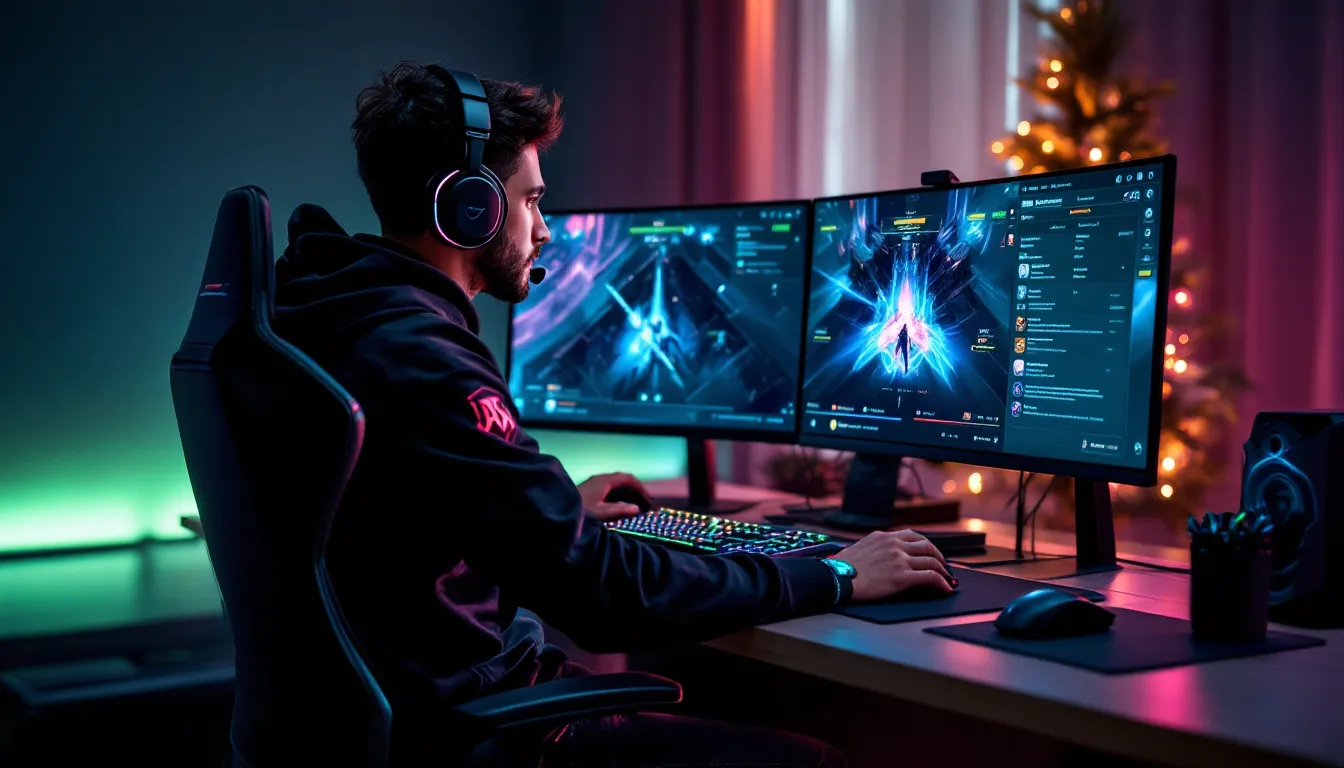
Cloud gaming is the most practical solution for most Mac players in 2026. Services like Xbox Cloud Gaming (formerly Game Pass Cloud), GeForce Now, and PlayStation Plus Premium stream League of Legends from powerful servers to your Mac. You’re essentially playing the Windows version remotely, so there’s zero compatibility concern.
The process is straightforward: subscribe to a service that supports League, launch the game through their app, and play. The game runs on a server somewhere, typically a data center with high-end hardware, and sends you video, while your inputs stream back. For casual to mid-competitive play, this works exceptionally well. A solid internet connection (minimum 35 Mbps for 1440p stability) is essential.
The real limitation is latency. Cloud gaming introduces network delay, typically 20-50ms depending on your proximity to data centers and internet quality. Competitive ranked players may notice this as “added input lag,” though many high-ranked players have proven it’s viable even for climbing.
Option 2: Virtual Machines And Emulators
Tools like Parallels Desktop or VMware Fusion create a virtualized Windows environment on your Mac. You install Windows inside this virtual machine, then install League of Legends normally. It works, but it’s not ideal for gaming, virtualization adds overhead, and you’re splitting your Mac’s resources between the host OS and the guest OS.
Emulation (using something like QEMU) is similar but even more resource-heavy. These options are viable for very casual play on powerful M-series Macs, but expect lower frame rates and occasional stuttering. They’re better suited as a backup option than a primary solution.
The appeal is that you own the installation and don’t rely on internet stability. The downside is setup complexity and performance overhead.
Option 3: Bootcamp And Windows Partition (Intel Macs Only)
For older Intel-based Macs, Bootcamp allows you to partition your drive and natively boot into Windows. Once you’re in Windows, League of Legends runs exactly as it does on a Windows gaming PC, full native performance, no virtualization overhead.
This is the closest experience to “true” League of Legends on Mac, but it only works on Intel Macs, and the setup is technical (you need a Windows license and a USB installation media). Modern M-series Macs can’t use Bootcamp, making this option increasingly irrelevant.
If you own an Intel Mac and want native gaming performance without cloud latency, Bootcamp is worth considering. But most players moving forward should look at newer solutions.
Option 4: CrossOver And Compatibility Layers
CrossOver (built on WINE, Wine Is Not an Emulator) is a compatibility layer that translates Windows API calls to macOS equivalents. It allows you to run Windows software on Mac without a virtual machine or Bootcamp partition.
Some Mac players have reported success running League through CrossOver, but support is inconsistent. The game requires specific configuration, updates can break compatibility, and performance isn’t guaranteed to be optimal. It’s worth trying if you’re technically inclined and want to avoid virtualization overhead, but cloud gaming and Bootcamp (for Intel Macs) are more reliable paths.
Comparing Mac Gaming Solutions: Pros And Cons
Performance Expectations Across Methods
Here’s how these options stack up on raw performance:
Cloud Gaming: You’re limited by your internet bandwidth and server capabilities, not your Mac’s hardware. On a good connection, you’ll see 60+ fps at 1440p. M-series Macs won’t be your bottleneck: your ISP will be. The league of legends download size isn’t relevant here since nothing is stored locally, everything streams.
Intel Mac Bootcamp: Full native Windows performance. If your Intel Mac meets League’s minimum specs (which most do), you’ll get stable 60 fps at 1080p, often higher at 720p. This is the closest to a “true” gaming experience on Mac hardware.
Virtualization (Parallels/VMware): Expect 30-50 fps depending on your Mac’s specs and resource allocation. Playable, but noticeably slower than native. M-series Macs will perform better than Intel due to superior architecture, but overhead is still present.
CrossOver: Highly variable. Some users report 60 fps: others hit 40-50 fps with stuttering. Compatibility issues mean this is less stable than other options.
For context, League of Legends download size varies by platform, but the core game typically requires 15-20 GB of storage. Cloud gaming eliminates storage concerns entirely.
Latency And Competitive Play Considerations
Latency matters more in League than in many other games. The game’s turn-based architecture and skill-shot mechanics mean input response time directly impacts your ability to execute plays.
Cloud Gaming Latency: Expect 20-50ms added latency. This is perceivable but not insurmountable. Players climbing to Diamond rank have done so via cloud gaming. Below that, most players won’t feel a significant disadvantage. Above Diamond, the added latency becomes a real limitation, especially in roles like ADC or Support where precision matters.
Bootcamp/Native: Zero added latency. You’re playing the same as any Windows player on the same network.
Virtualization: Similar to cloud gaming in terms of perceived latency, though the mechanism differs. Overhead is local rather than network-based.
If you’re a casual player, cloud gaming’s latency is negligible. If you’re a competitive grinder, native Bootcamp (Intel Mac) or Windows desktop is preferable.
The key takeaway: competitive viability exists through cloud gaming, but it’s not the ideal path for high-ranked play. That’s one reason League Macro Improvement: Transform Your Strategy for Winning Games becomes even more important for Mac players, macro play (wave management, map rotation, objective priority) is less latency-dependent than raw mechanical execution, and it’s where Mac players can gain the biggest edge.
Step-By-Step Setup Guide For The Best Mac Option
Getting Started With Cloud Gaming On Mac
Cloud gaming is the most accessible option for most Mac users, so here’s how to set it up:
Step 1: Choose a service. Xbox Cloud Gaming (included with Game Pass Ultimate) and GeForce Now are the most reliable. Xbox Game Pass Ultimate costs $16.99/month and includes access to hundreds of games plus cloud streaming. GeForce Now has a free tier with queues, or a paid tier ($9.99/month or $99.99/year) for priority access.
Step 2: Verify your internet. Test your speed at speedtest.net. You need minimum 35 Mbps for 1080p/60fps, 50+ Mbps for 1440p. Upload speed should be 5 Mbps or better.
Step 3: Install the app. Download the Xbox Game Pass app or GeForce Now client from their respective websites to your Mac.
Step 4: Sign in and launch League. Both services let you browse available games. Launch League of Legends directly from the app interface. If you’re using GeForce Now, you’ll need an existing League account with Riot: the service streams from your existing library.
Step 5: Configure controller or mouse/keyboard. Both services support both input methods. For League, keyboard and mouse is standard, but some players prefer controllers with remapped inputs.
Step 6: Test and optimize. Play a practice tool game first. Check if video quality is stable. If you see stuttering, lower your resolution preference in the app settings.
Optimizing Your Mac For Peak Performance
Even with cloud gaming, your Mac’s local performance affects overall experience. Here are optimization steps:
Close background apps: Before playing, quit browsers, Slack, mail clients, and anything else drawing CPU/memory. This frees resources for the streaming app and your network connection.
Use a wired connection if possible: WiFi works, but Ethernet eliminates variable latency. If you can run a USB-to-Ethernet adapter, do it.
Update your OS: Make sure macOS is fully updated. Apple’s updates often include network and graphics optimizations.
Allocate sufficient RAM to the app: In Activity Monitor, check how much RAM the cloud gaming app is using. M-series Macs with 16GB+ RAM should have no issues: 8GB can work but is tighter.
Reduce other network traffic: Turn off iCloud syncing, disable automatic updates, and pause any large downloads on other devices. Your internet connection is your lifeline, protect it.
Monitor thermal performance: Long gaming sessions can heat your Mac. Ensure ventilation is clear, consider an external cooling pad if your Mac tends to thermal throttle, and take breaks. Thermal throttling reduces performance mid-game.
According to How-To Geek’s gaming setup guides, optimizing your local environment before relying on cloud streaming makes a meaningful difference in perceived latency and frame rate stability.
Common Issues Mac Players Face And How To Fix Them
Lag, Crashes, And Stability Problems
Cloud gaming lag or stuttering: This usually points to internet issues. First, restart your modem and router. Test your connection speed, if you’re below 35 Mbps, cloud gaming won’t be smooth. Some ISPs have latency issues at specific times of day: try playing at different times to confirm if your problem is consistent. If it’s consistent, contact your ISP. Alternatively, switching to a wired connection or moving closer to your WiFi router can help.
Game crashes on Bootcamp or virtualization: Ensure Windows is fully updated with all patches installed. Check that your Mac’s storage isn’t critically full (aim for 10%+ free space minimum). If League crashes at launch, verify your antivirus isn’t blocking the game executable. Windows Defender sometimes flags game executables unnecessarily.
Occasional disconnects in-game: Again, likely network-related. If you’re on WiFi, interference from microwaves or baby monitors can cause brief drops. Wired connection solves this. If you disconnect repeatedly, contact your ISP’s support: packet loss is their problem to diagnose.
Performance degradation over time: Cloud gaming may degrade after 2-3 hours as your Mac heats up. Take a break, let your machine cool, and restart the app. For Bootcamp or virtualization, the same applies, close and reopen the game to clear any memory leaks.
Controller And Input Configuration On Mac
Most Mac players use keyboard and mouse, the default input method. But if you prefer a controller:
Xbox or PlayStation controllers: Both work on Mac via Bluetooth. Pair them through System Preferences > Bluetooth. Reconnect to the cloud gaming app or emulation tool and configure button mapping within League’s settings.
Button remapping for League: League’s default control scheme assumes WASD movement with mouse. On a controller, this translates poorly. Recommended setup: map movement to the left stick, camera to the right stick, abilities to face buttons (X, Y, A, B), and items to shoulder buttons (LB/RB). Target selection can use right trigger.
Input lag with controllers: Bluetooth can introduce slight latency, especially on older Macs. If you notice input delay, try a wired connection (for cloud gaming, wired internet helps: for controller, USB wired connection eliminates Bluetooth delay entirely).
Keyboard/mouse lag: If your mechanical keyboard or mouse feels laggy, check Bluetooth signal strength (move closer to your Mac), lower polling rate, or switch to a wired setup. Many competitive players prefer wired peripherals specifically to eliminate wireless variability.
For detailed setup advice, Tom’s Guide has excellent gaming peripherals guides that cover controller compatibility and configuration across platforms.
The Future: Will League Of Legends Ever Come To Mac?
Speculation about a native Mac version has circulated for years, but evidence of movement is scarce. Here’s what we know:
Industry trends: More developers are using cross-platform engines (Unreal Engine 5, Godot, Unity), making Mac ports easier. But, League’s proprietary engine and Riot’s Windows-first architecture mean starting from scratch would be a monumental undertaking.
Market size: Mac’s gaming market share has grown but remains a fraction of Windows. The business case for Riot to develop and maintain a native port hasn’t shifted enough to overcome the engineering costs.
Apple Silicon opportunity: M-series Macs are genuinely powerful and have attracted more game publishers. Some publishers have ported games to Apple Silicon. But Riot would still need to solve the engine conversion problem, not just the architecture problem.
Riot’s priorities: The company has focused on console ports (League on PlayStation 5, Xbox Series X) and mobile (League of Legends: Wild Rift). These are larger markets than Mac gaming. Unless that calculation changes dramatically, a native Mac client remains unlikely.
What could change it: If Mac gaming exploded (unlikely given current trends) or if Riot rebuilt League on a modern cross-platform engine (massive undertaking), a Mac version might materialize. But in the near term, it’s not on the roadmap.
The takeaway: don’t wait for a native Mac client. The solutions available today, cloud gaming especially, are mature enough to play competitively now. According to Laptop Mag’s gaming reviews, cloud gaming has matured to the point where latency is no longer the prohibitive factor it once was, making today’s workarounds legitimately viable.
Conclusion
Playing League of Legends on Mac requires workarounds, but it’s absolutely doable in 2026. Cloud gaming is the most practical entry point, it requires no technical setup, works on any Mac, and provides solid performance for most players. If you own an Intel Mac, Bootcamp offers native performance without latency. Virtual machines and emulators work for casual play.
The lack of an official Mac client remains frustrating, but it’s not a dealbreaker. Thousands of Mac players are actively climbing the ranked ladder, competing in tournaments, and enjoying the game without a native port.
Choose the solution that fits your priorities: if you want ease of use and low maintenance, cloud gaming wins. If you want native performance and have an Intel Mac, Bootcamp is your answer. If you’re comfortable with technical setup, virtualization works.
Regardless of which path you choose, the game itself, the macro plays, the mechanical skill, the decision-making, remains unchanged. You’re not at a fundamental disadvantage on Mac. You’re just taking a different route to get there.